

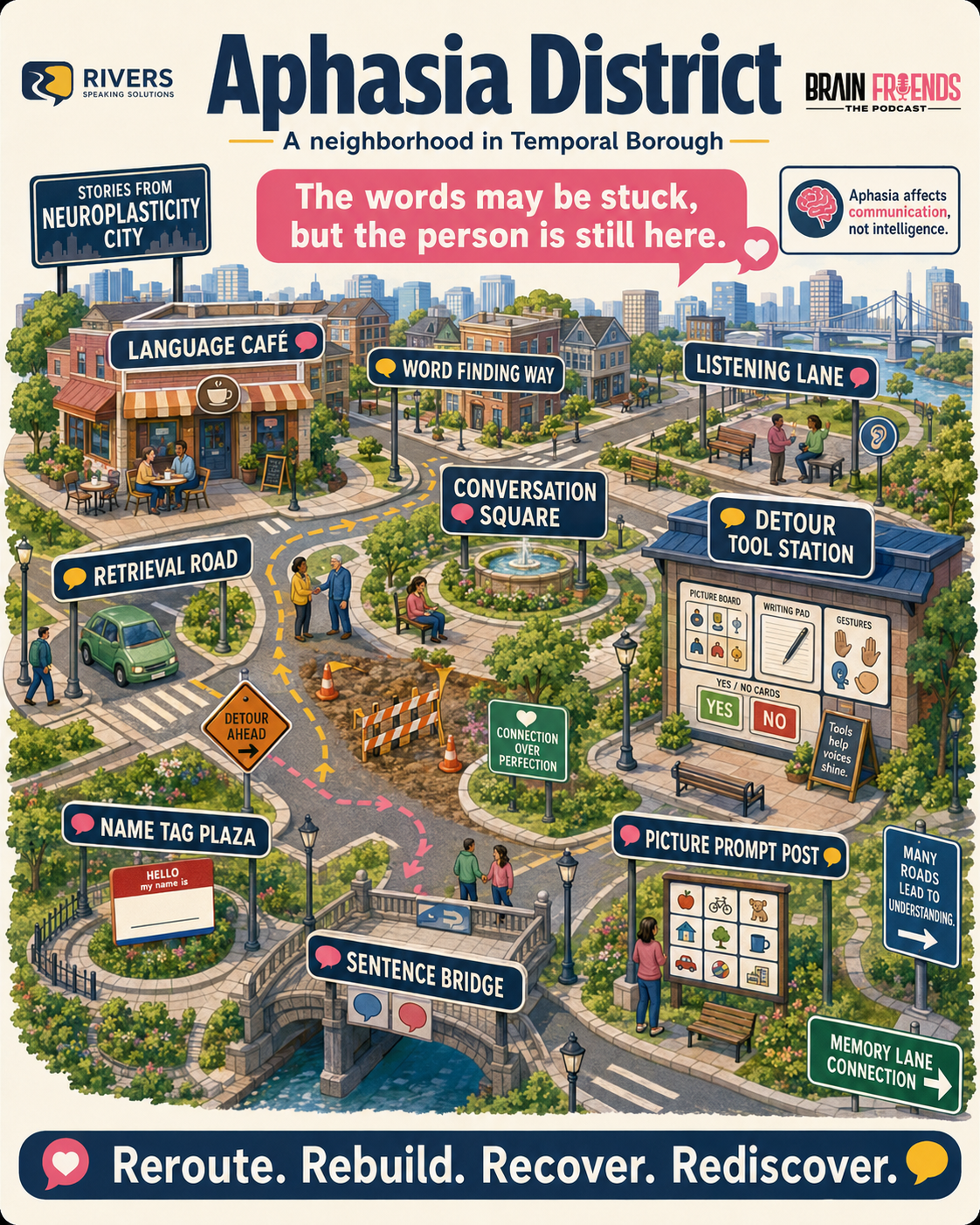
This June, we are opening the doors to Aphasia District
Not for a lecture. For a tour. Walk the neighborhood with us all month.
Aphasia is bigger than one definition, one diagnosis, or one survivor story. It can happen after stroke. It can happen after brain injury. It can show up slowly through Primary Progressive Aphasia. It can affect speaking, understanding, reading, writing, confidence, and connection.
But here is what it does not do.
So this month, Temporal Borough gets the spotlight. We are walking these streets together.
Awareness is not just knowing the word aphasia. Awareness is knowing how to treat the person standing in front of you.
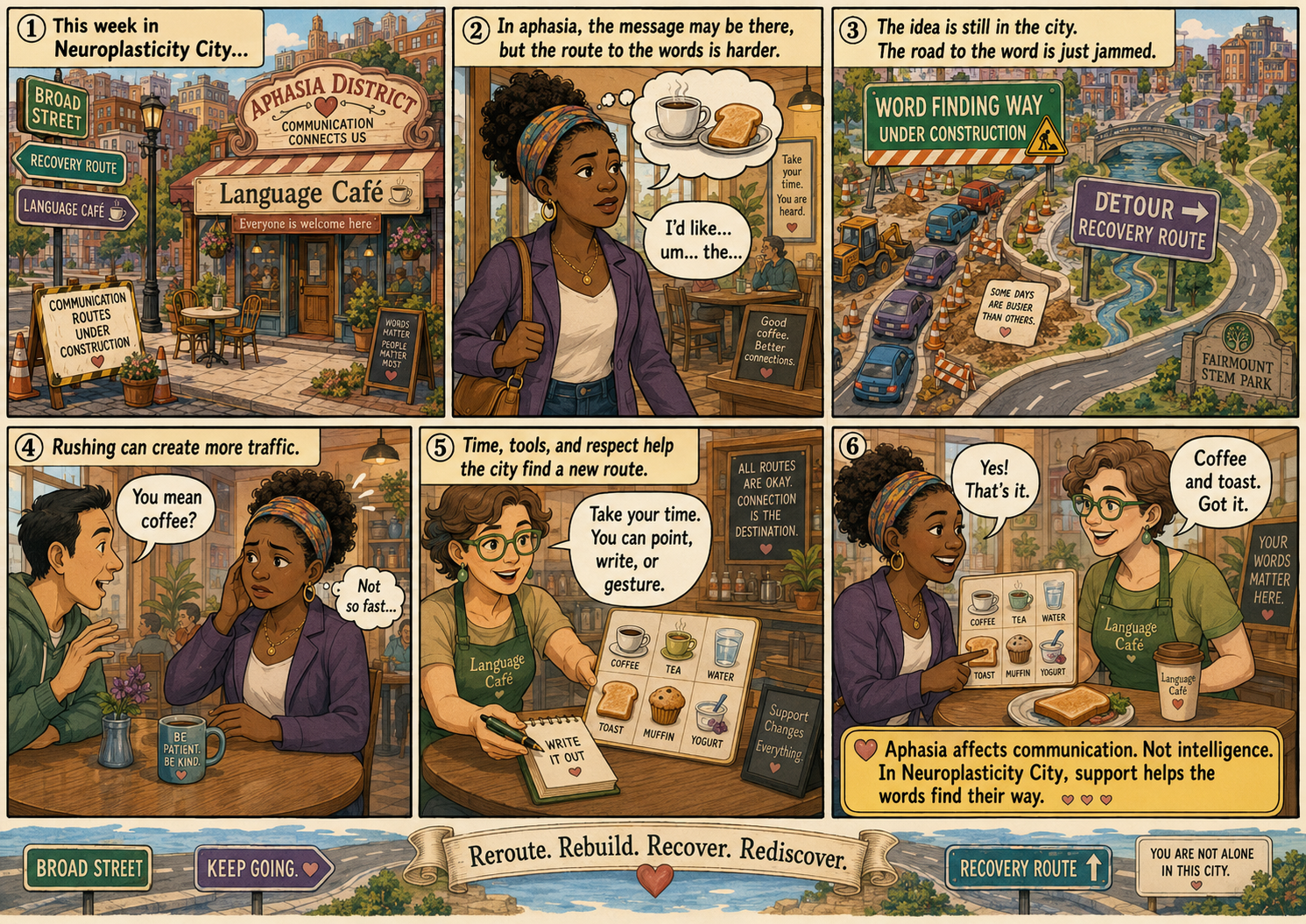
Pull up a chair at Language Café
This week, we are pulling up a chair at Language Café. The order is simple. The thought is clear. The word is stuck in traffic. And everybody in line is about to learn something.
The first strip in our Aphasia Awareness Month pilot is about patience, pressure, and what it really means to help someone communicate.
The word is stuck. The person is not. The message still matters.
Visit Language Café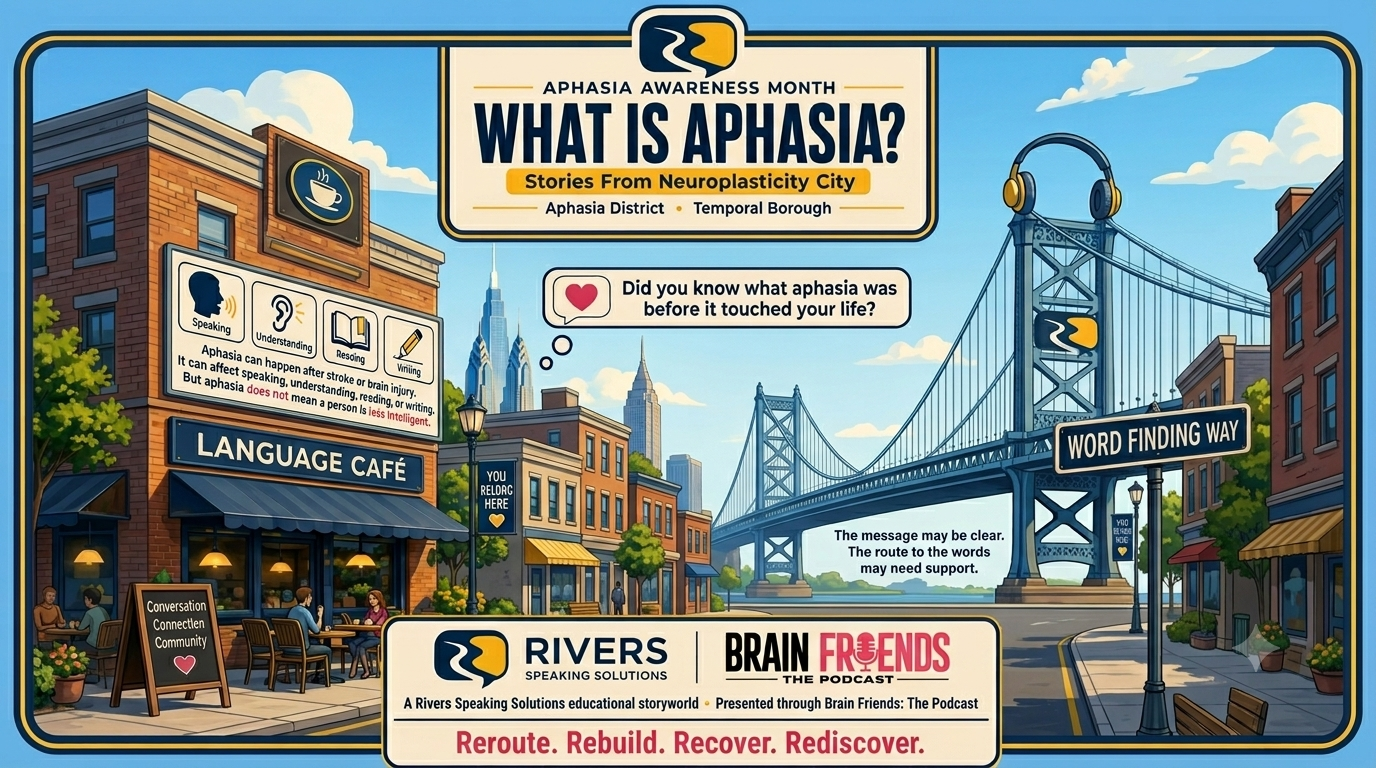
Big numbers, unfamiliar word
people in the U.S. live with aphasia.
of people who have a stroke have aphasia at the time of stroke.
of stroke survivors still have aphasia three months later.
The numbers are big. The word is still unfamiliar. That is why Aphasia Awareness Month matters.
Sources: National Aphasia Association and NIDCD/NIH.
Communication, not intelligence
Aphasia affects communication, not intelligence. It can change four parts of how a person connects. The message can be clear. The route to the words just needs support.
Different routes into the district
Stroke is one route into Aphasia District. Brain injury is another. Primary Progressive Aphasia, also called PPA, is another.
PPA does not usually arrive all at once. It can begin slowly and affect language over time. Some people lose word meaning. Some speak with more effort. Some struggle to find words or repeat sentences.
Aphasia Awareness Month has to make room for all of those stories.
Many tools. Same message.
Communication tools are not cheating. They are bridges.
Connection is part of the work.
Music, singing, choirs, support groups, aphasia clinics, therapy, family meals, church, trusted friends, and community programs can help people stay connected. Not because they fix everything. Because being included matters. Confidence matters. Practice matters. Community matters.
The goal is not perfect speech. The goal is connection.
Talk back to us
Awareness goes both ways. Pick any question and tell us in the comments or send it in.
- When was the first time you heard the word aphasia?
- Did aphasia enter your life through stroke, brain injury, PPA, or someone you love?
- What helps when words get stuck?
- What communication tool has helped you?
- Have you ever been part of an aphasia clinic, group, or program?
- What do you wish more people understood about aphasia?
If aphasia is part of your life, we want to hear from you
You can share a sentence. A voice note. A short video. A drawing. A memory. A question. A moment where you felt seen. A moment where you wish people had understood more.
We will only feature community voices with permission.
Share Your Aphasia StoryWhat are the types of aphasia?
Because aphasia is not one lane. Some people struggle to get words out. Some struggle to understand fast speech. Some speak fluently, but the message gets tangled. Some have Primary Progressive Aphasia, where language changes slowly over time.
Different routes. Different traffic. Same truth: the person is still here.
Follow the Aphasia District Pilot