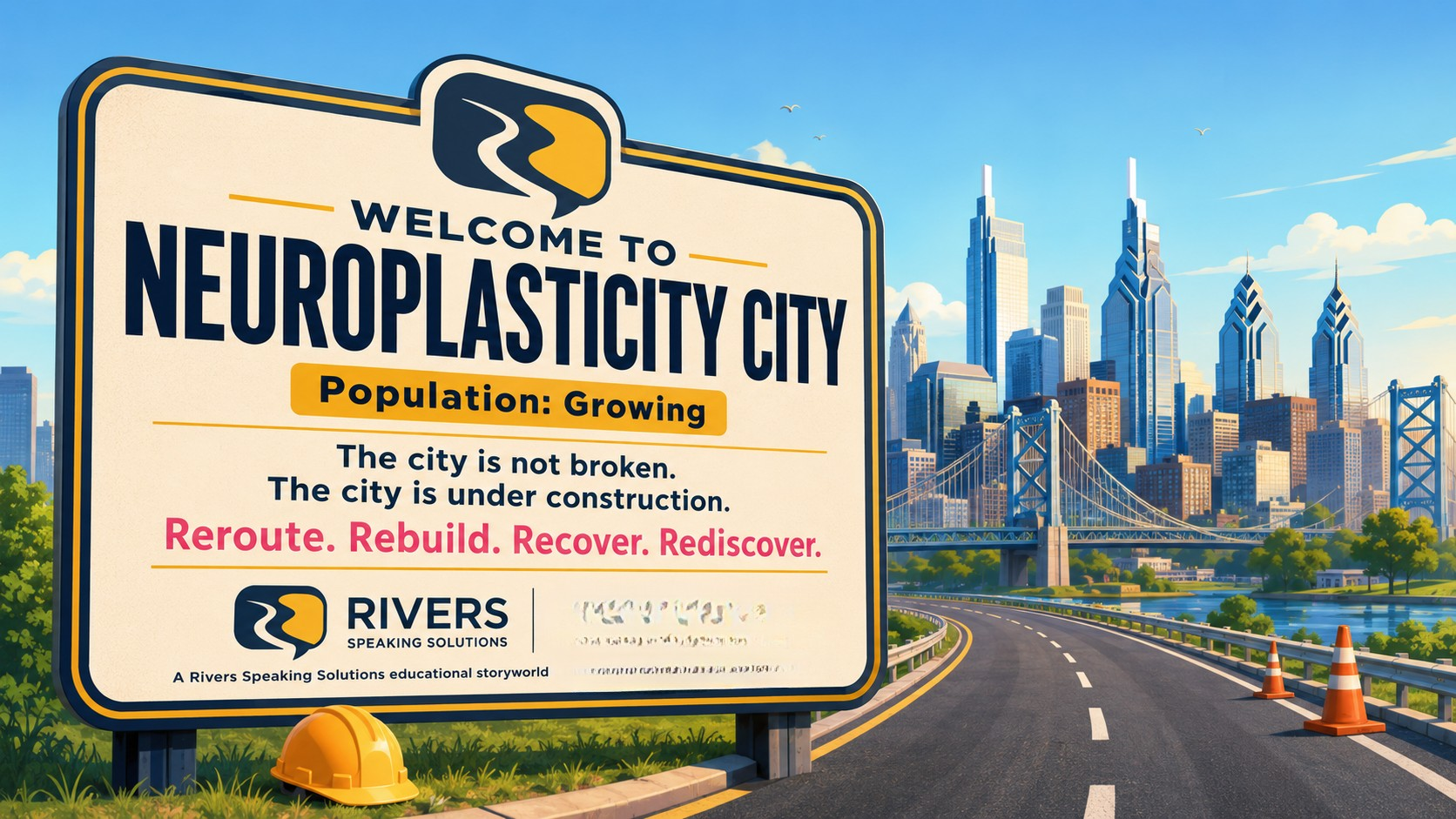
A brain under construction.
Your brain can change and adapt its connections. That ability is called neuroplasticity. After a stroke, focused practice and rehabilitation can help you relearn skills for everyday life.
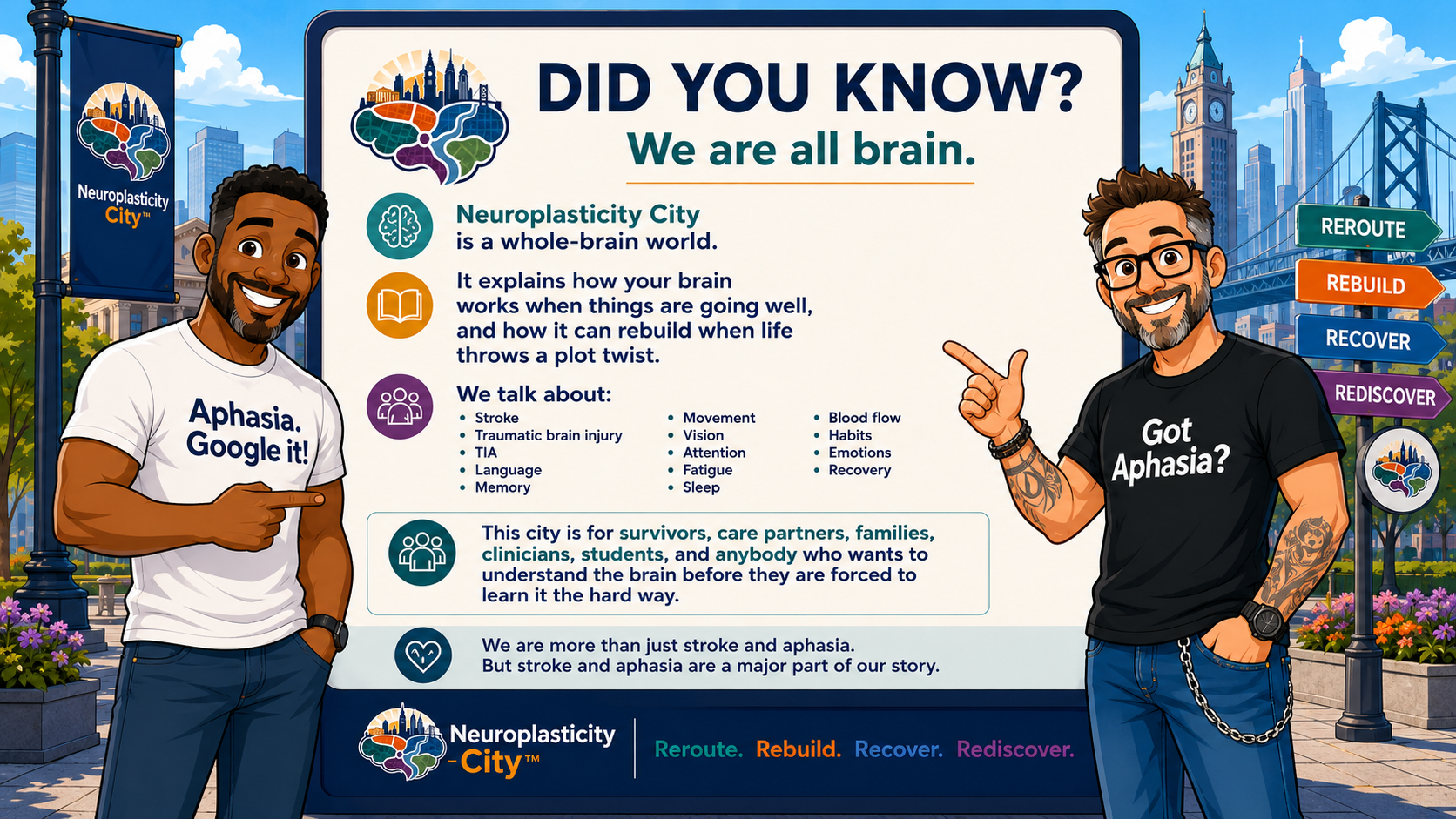
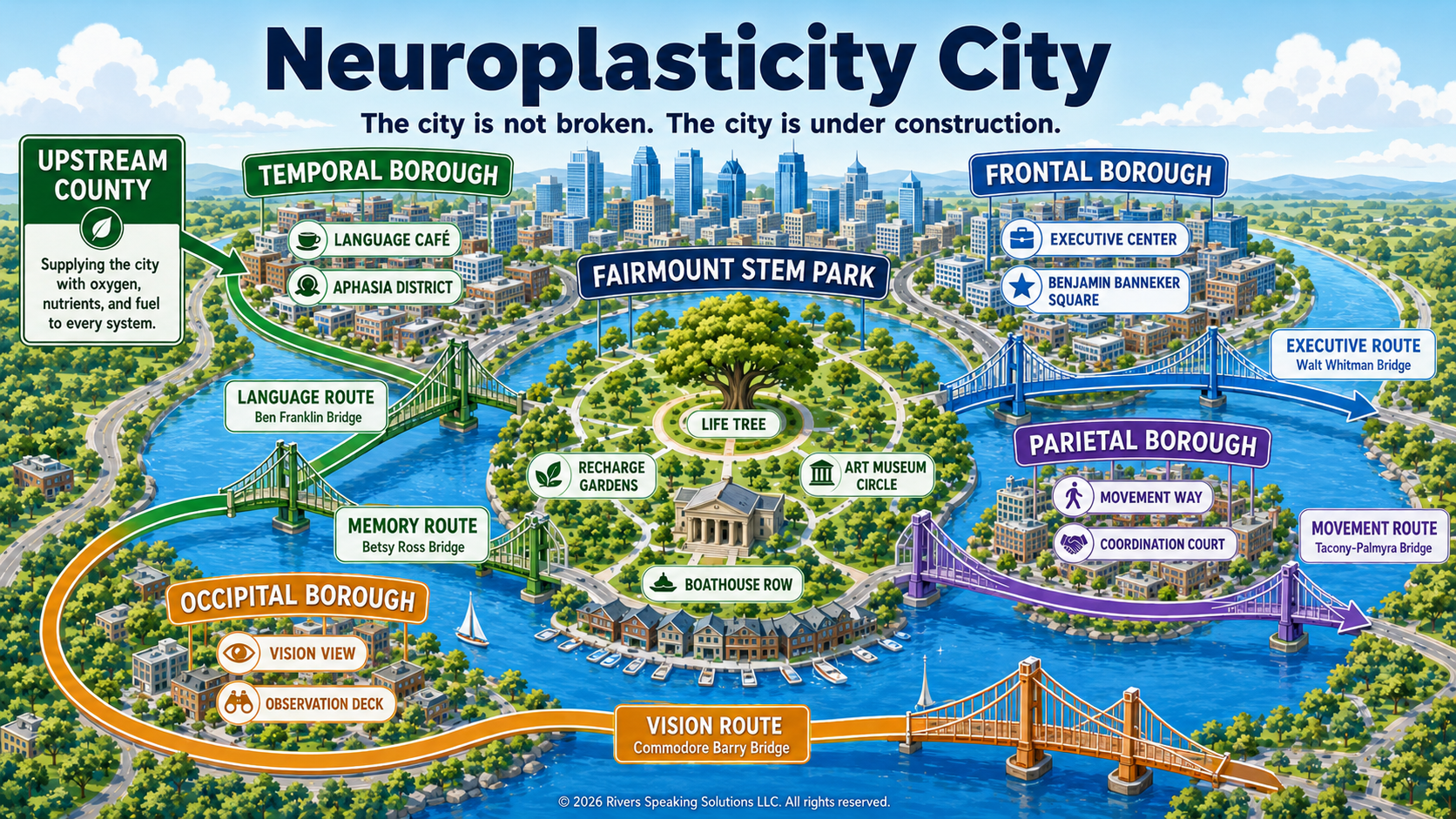
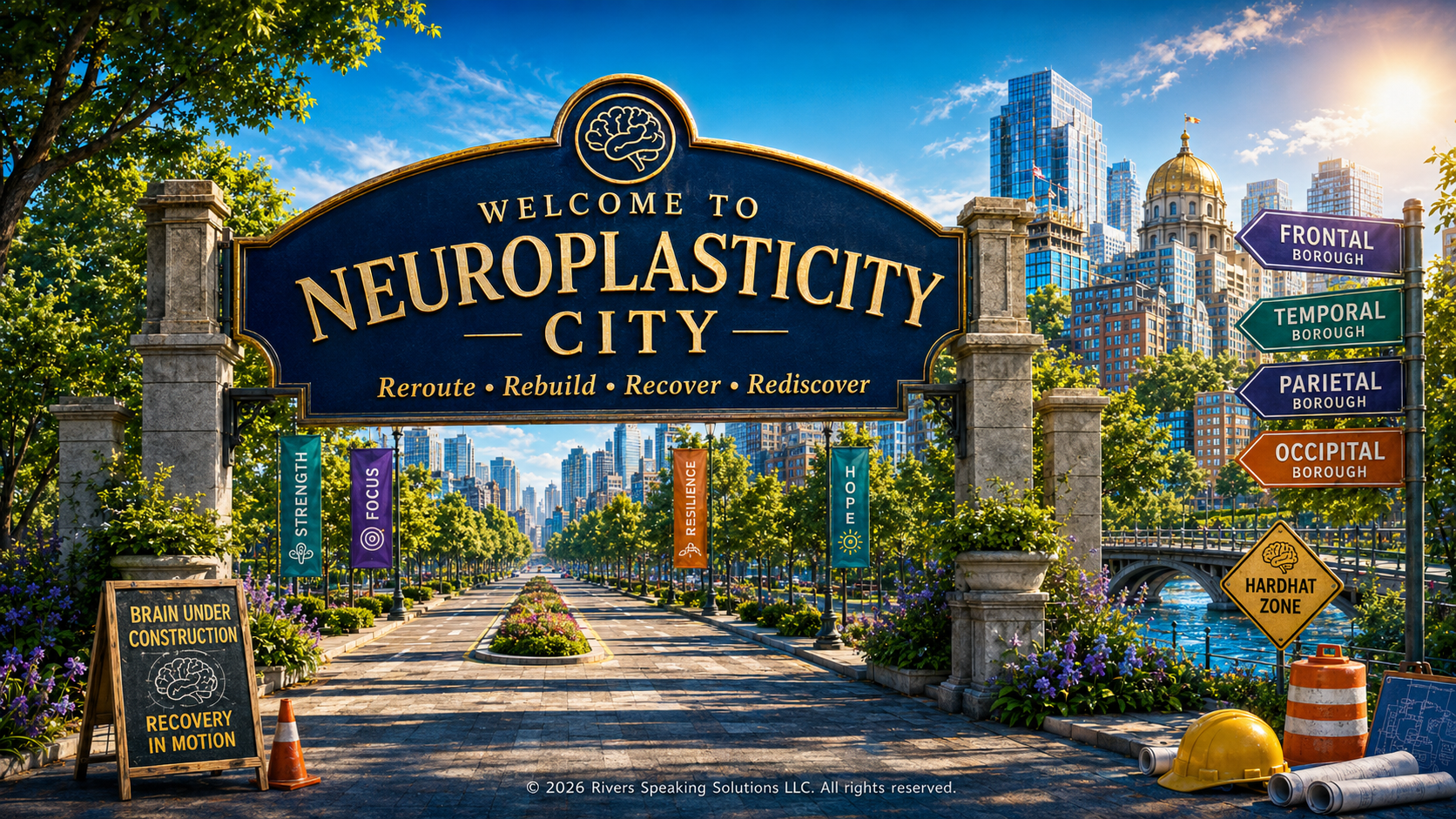
Built from lived experience, Neuroplasticity City uses neighborhoods, routes, and a construction crew to make brain science easier to understand.
Watch on YouTube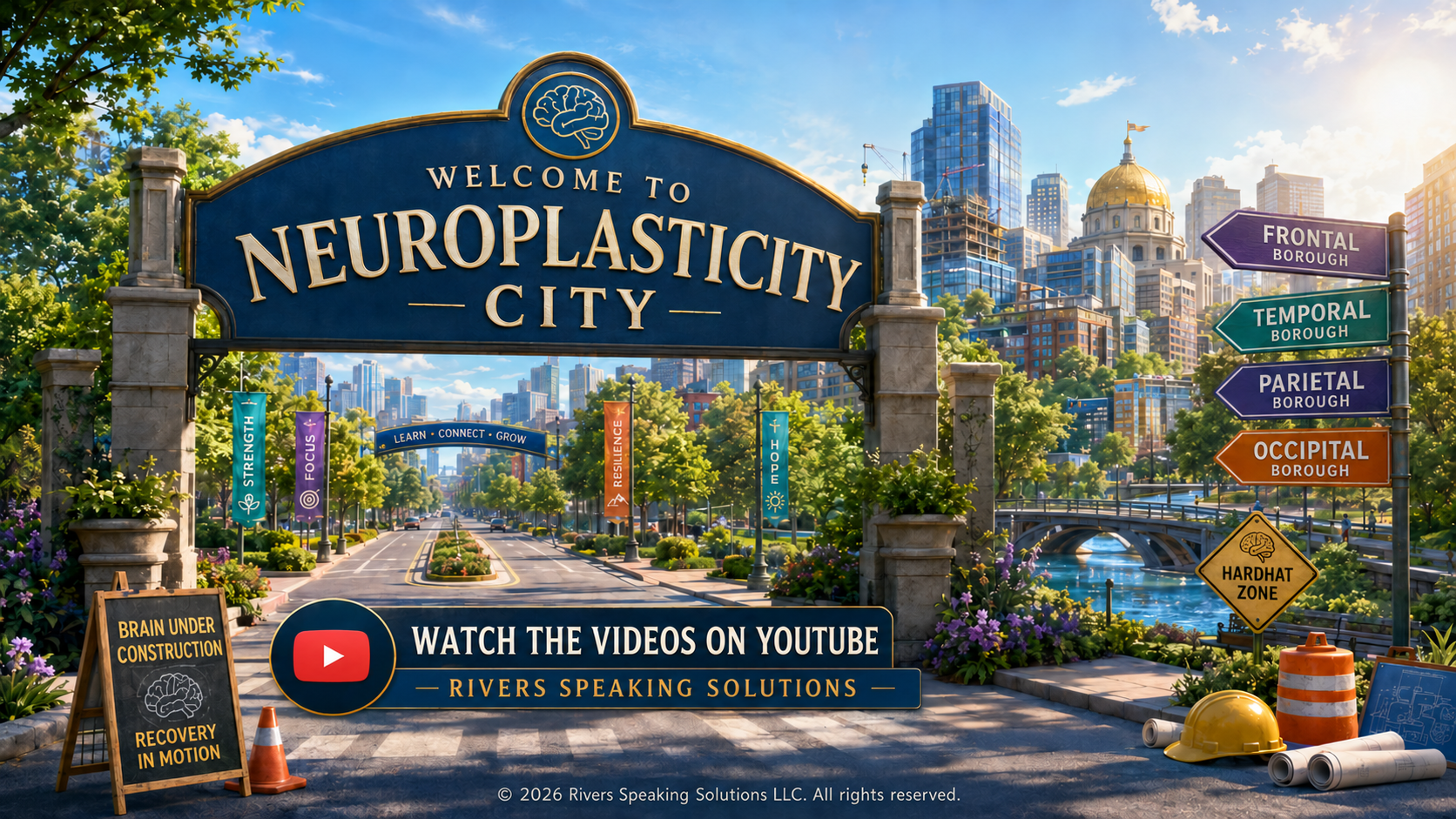 Enter the city. Watch on YouTube ↗
New routes. Meaningful practice.
A stroke can disrupt connections the brain uses to move, communicate, and think. Rehabilitation helps people practice meaningful skills and find new ways to do everyday tasks. Recovery varies from person to person and can continue over months and years.
Explore the science: American Stroke Association recovery guide · Communication and aphasia
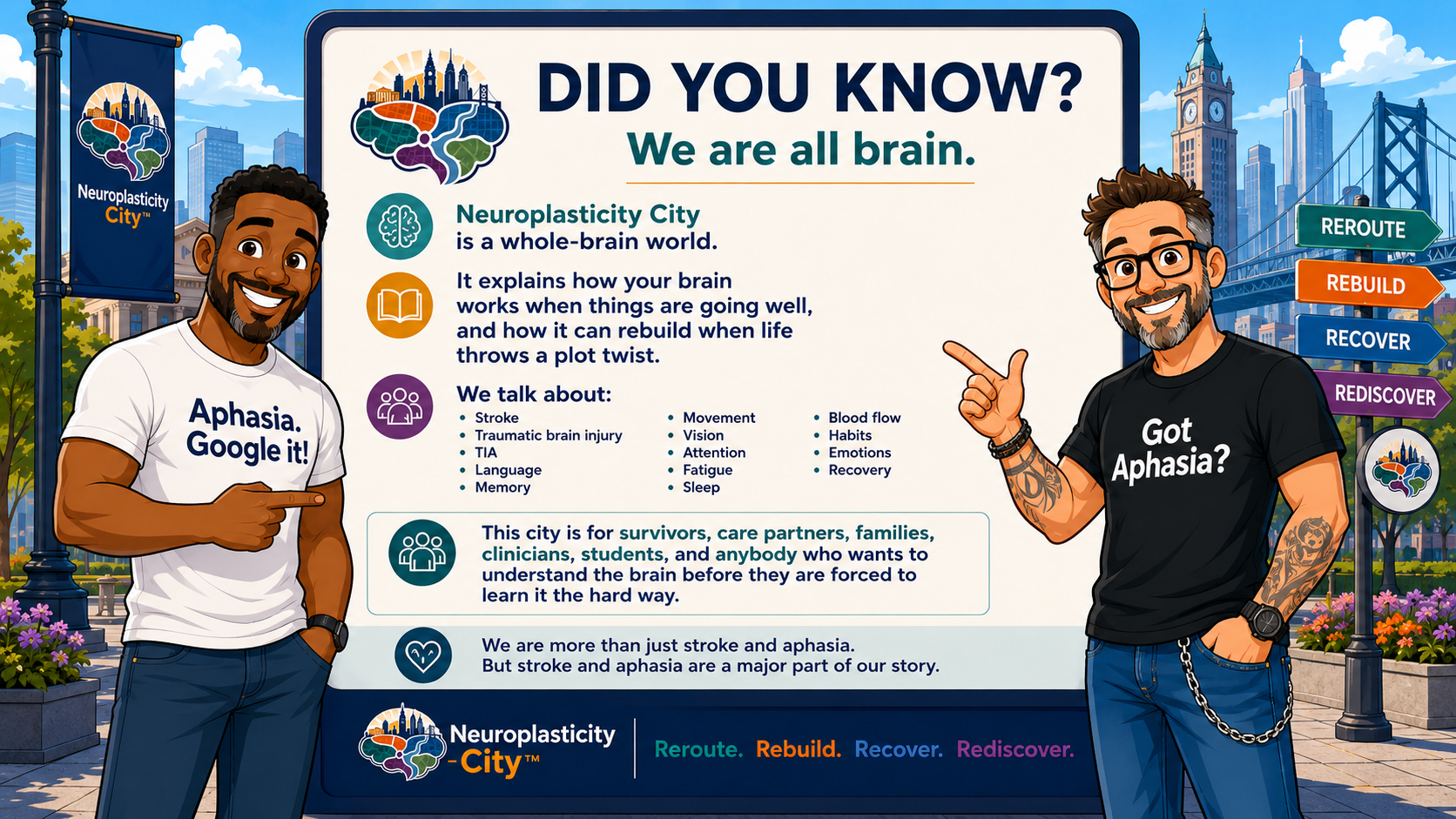
J and Rye help us read the signs.
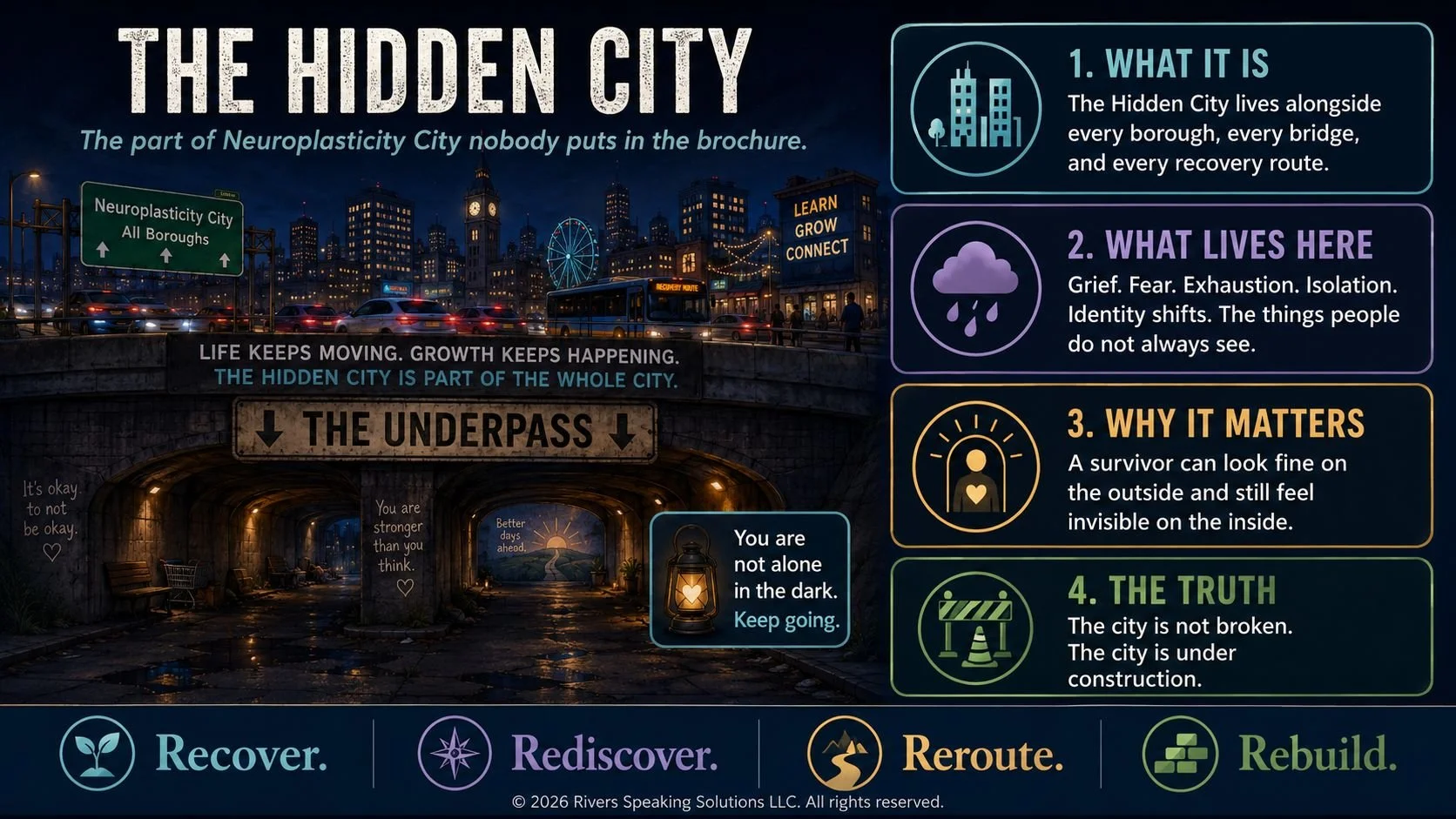
The city makes room for the questions that follow us home. Who can help? How do we communicate? What does support look like today?
Your recovery crew. Therapists, nurses, doctors, and other specialists work together on movement, daily tasks, communication, thinking, and emotional health.
Room for communication. With aphasia, allow time to respond. Words, gestures, drawing, and writing can all help someone be heard.
Care partners need care, too. Offer specific help, such as a meal, a ride, or an agreed time to stay with someone, so support becomes something people can use.
Different strengths. One connected brain.
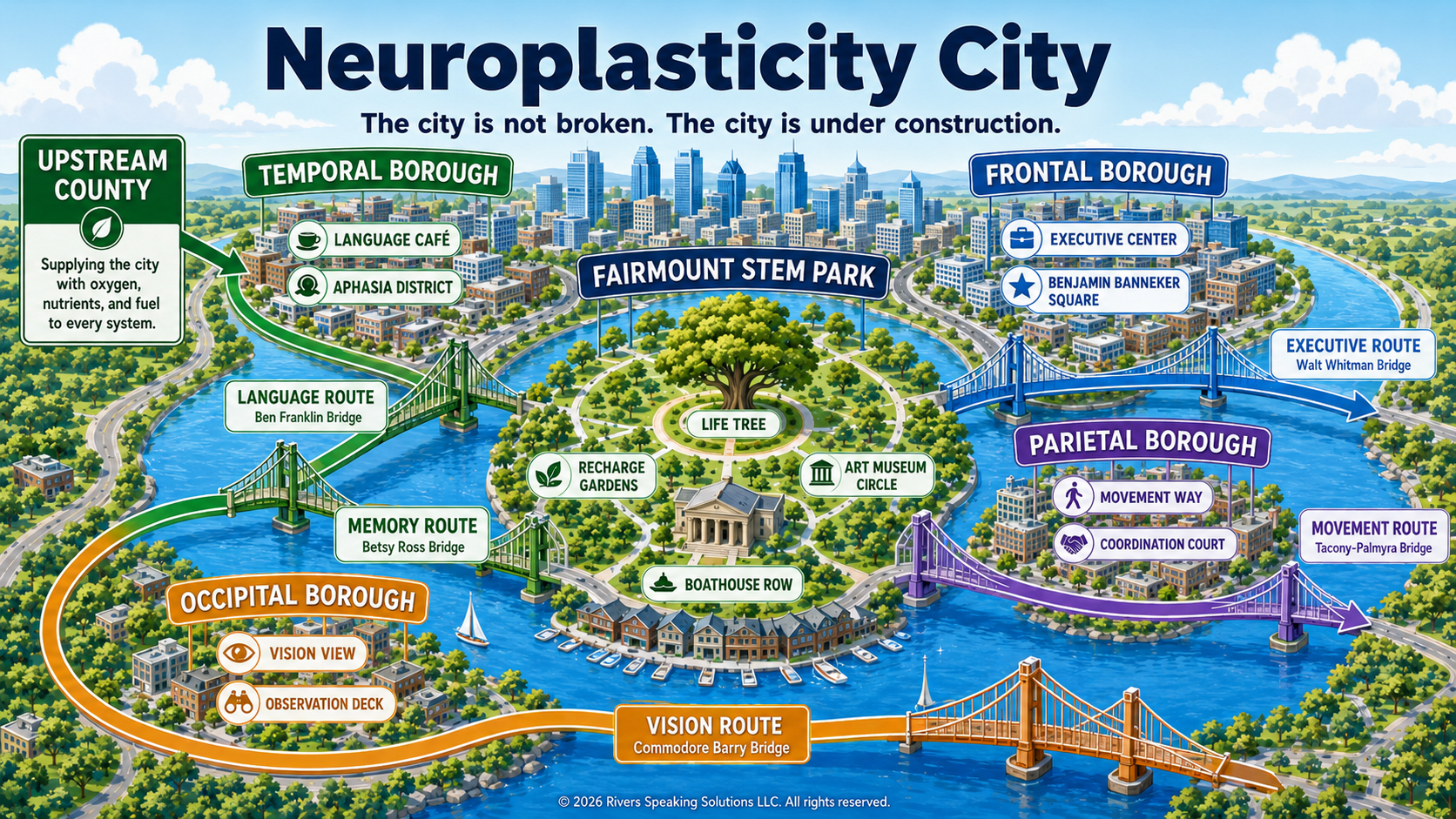
The boroughs are a learning metaphor for the brain’s lobes. Functions depend on connected networks, so no borough works alone. The four R’s guide the city’s story; they are not fixed stages of recovery.
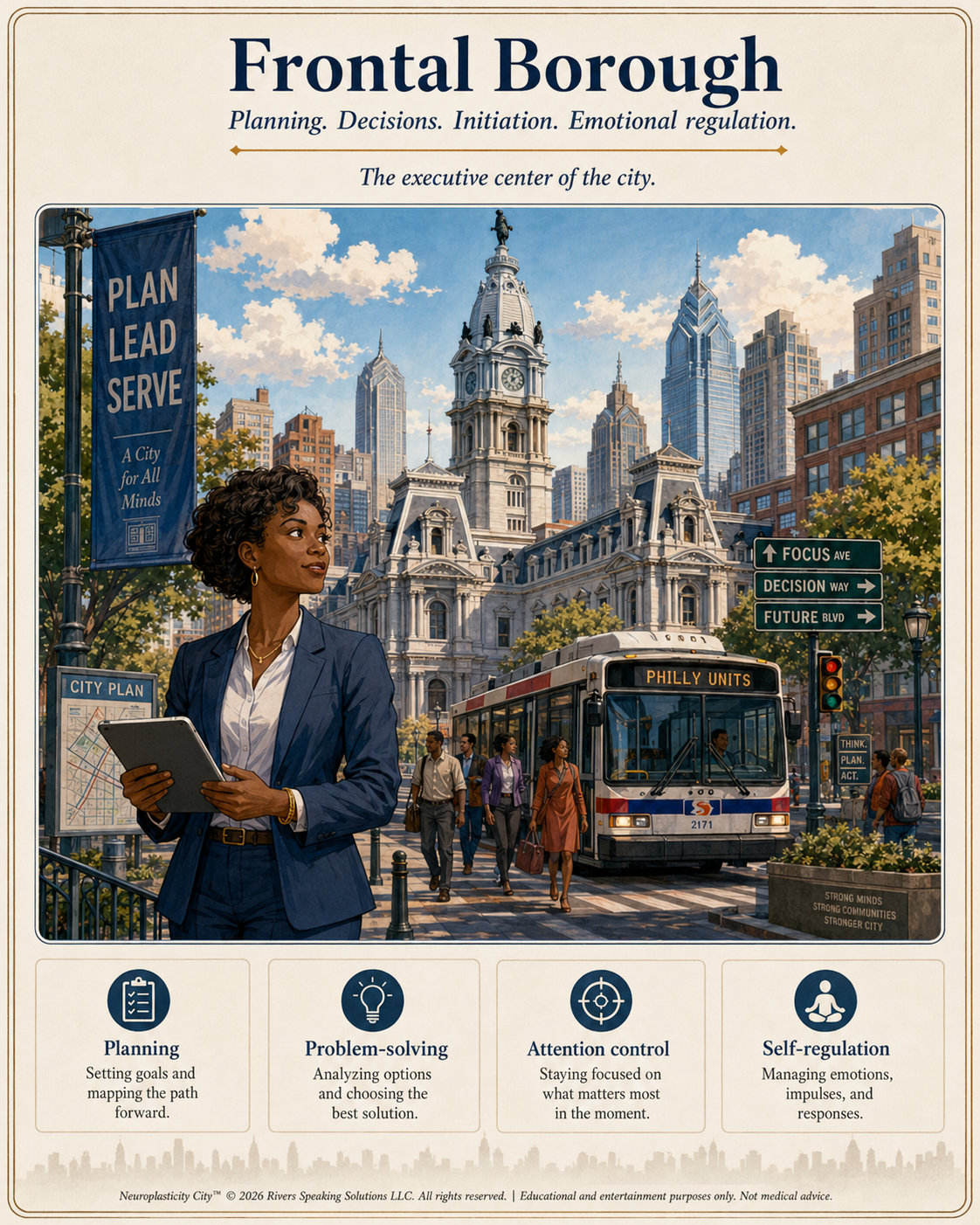
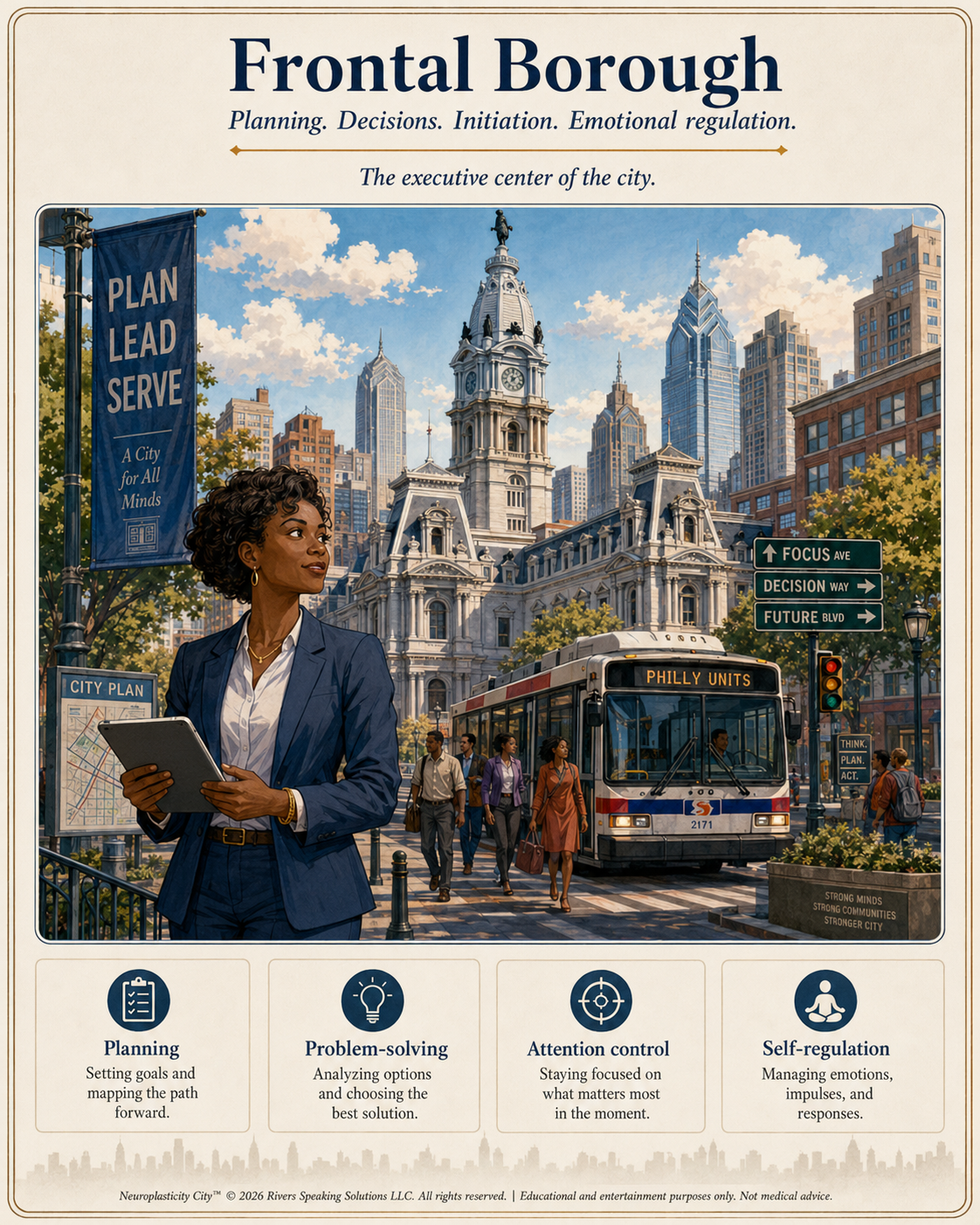
Frontal Borough
Planning, decisions, initiation, attention, behavior, and what comes next. Rebuild.
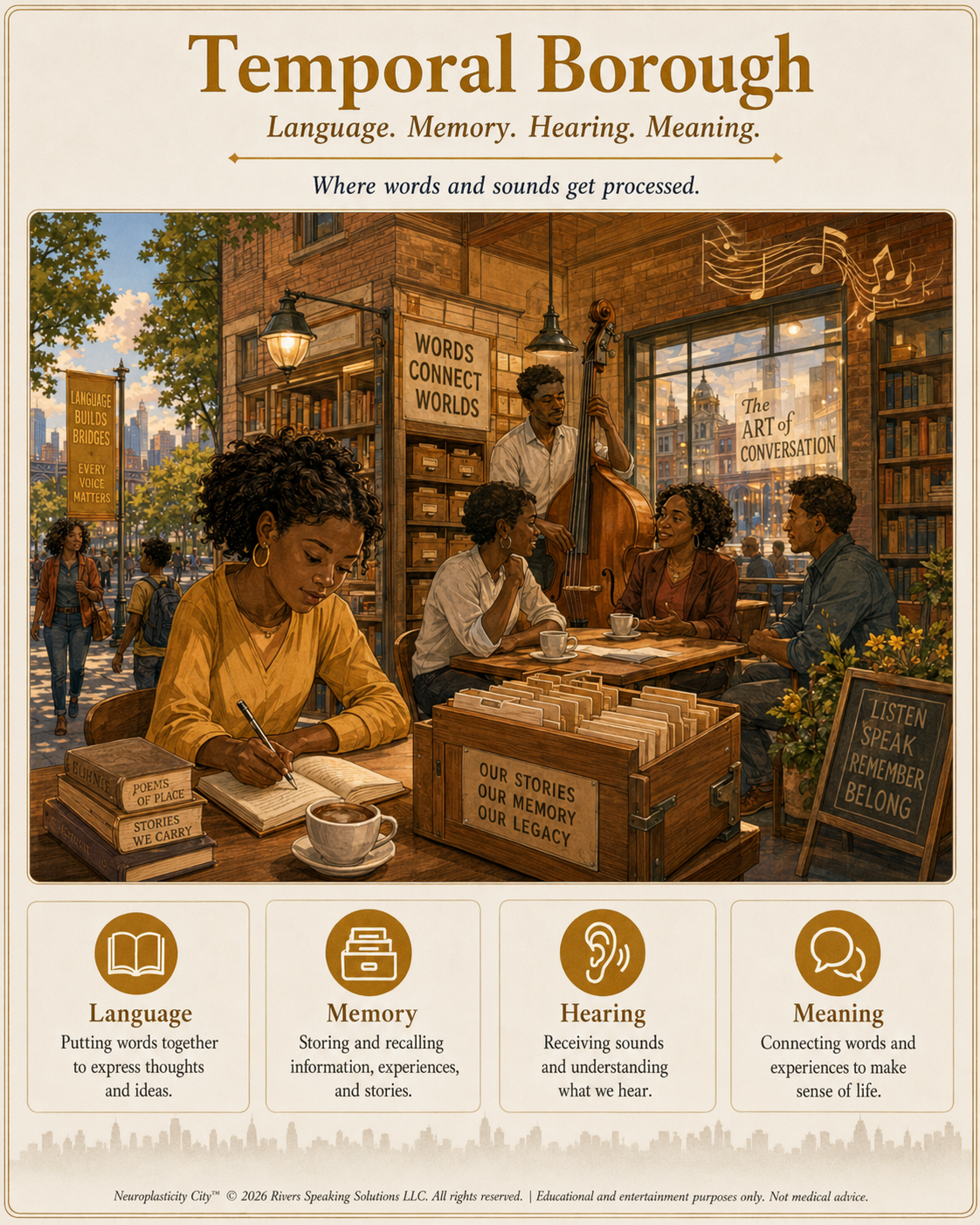
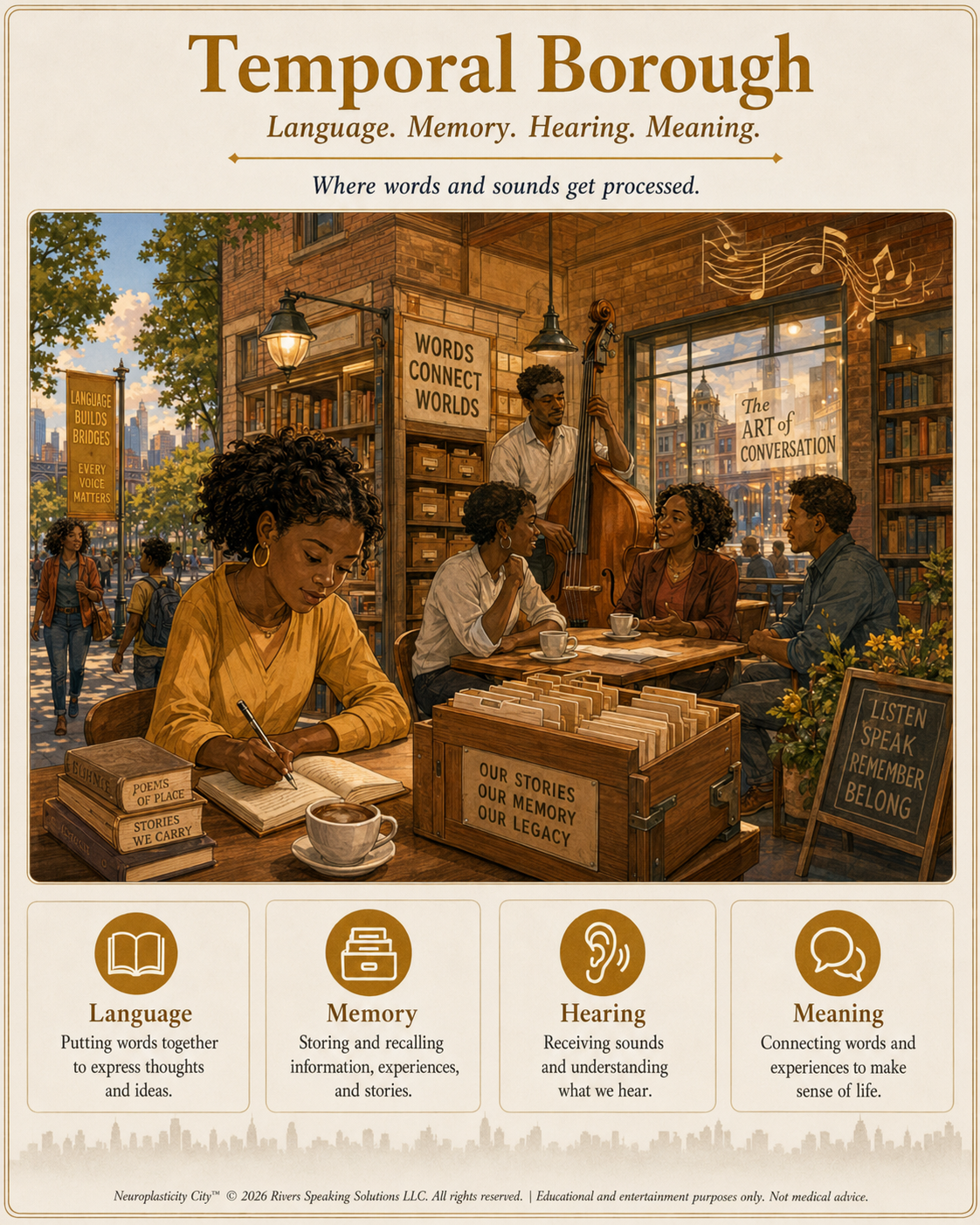
Temporal Borough
Language, memory, hearing, recognition, and meaning. Reroute.
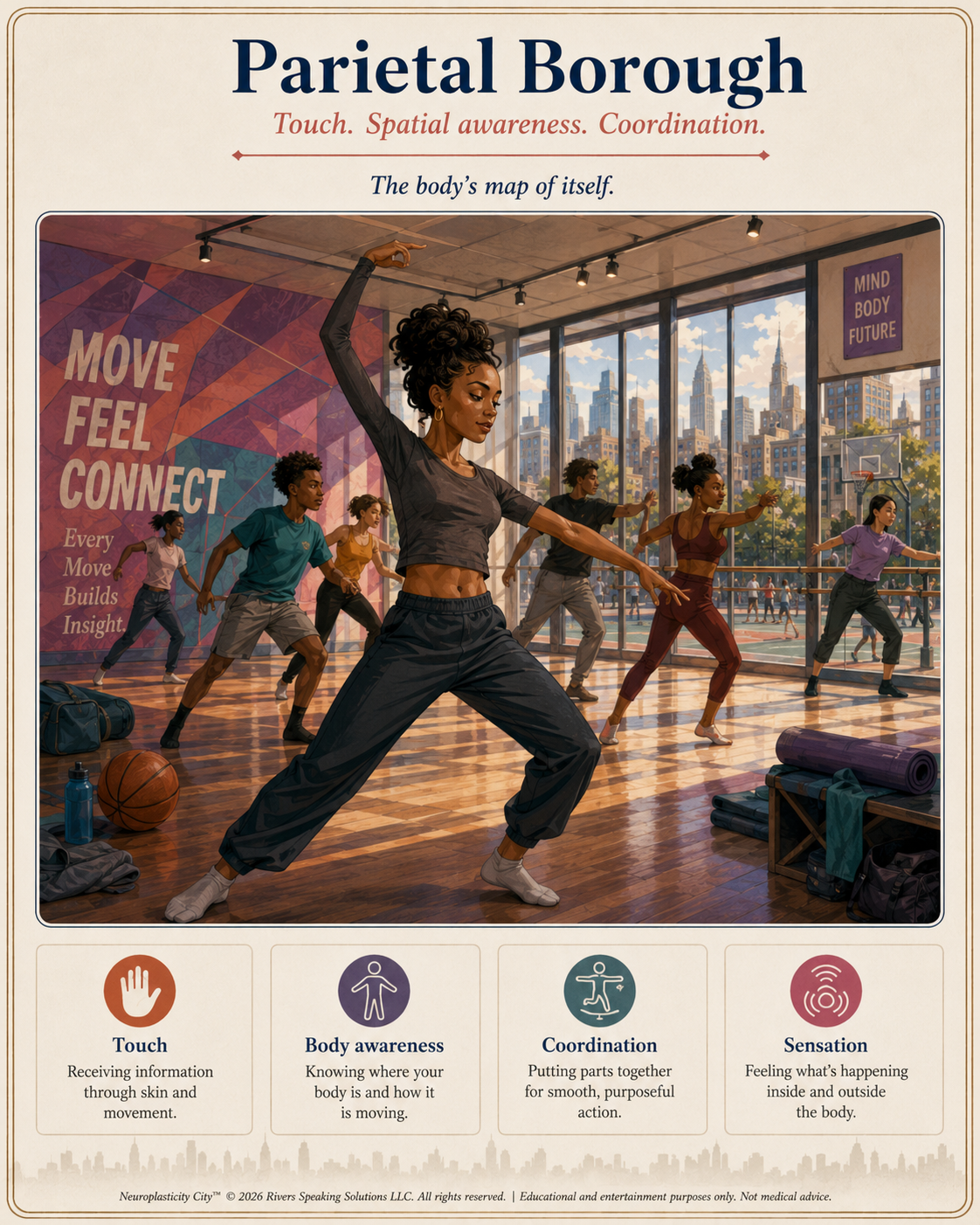
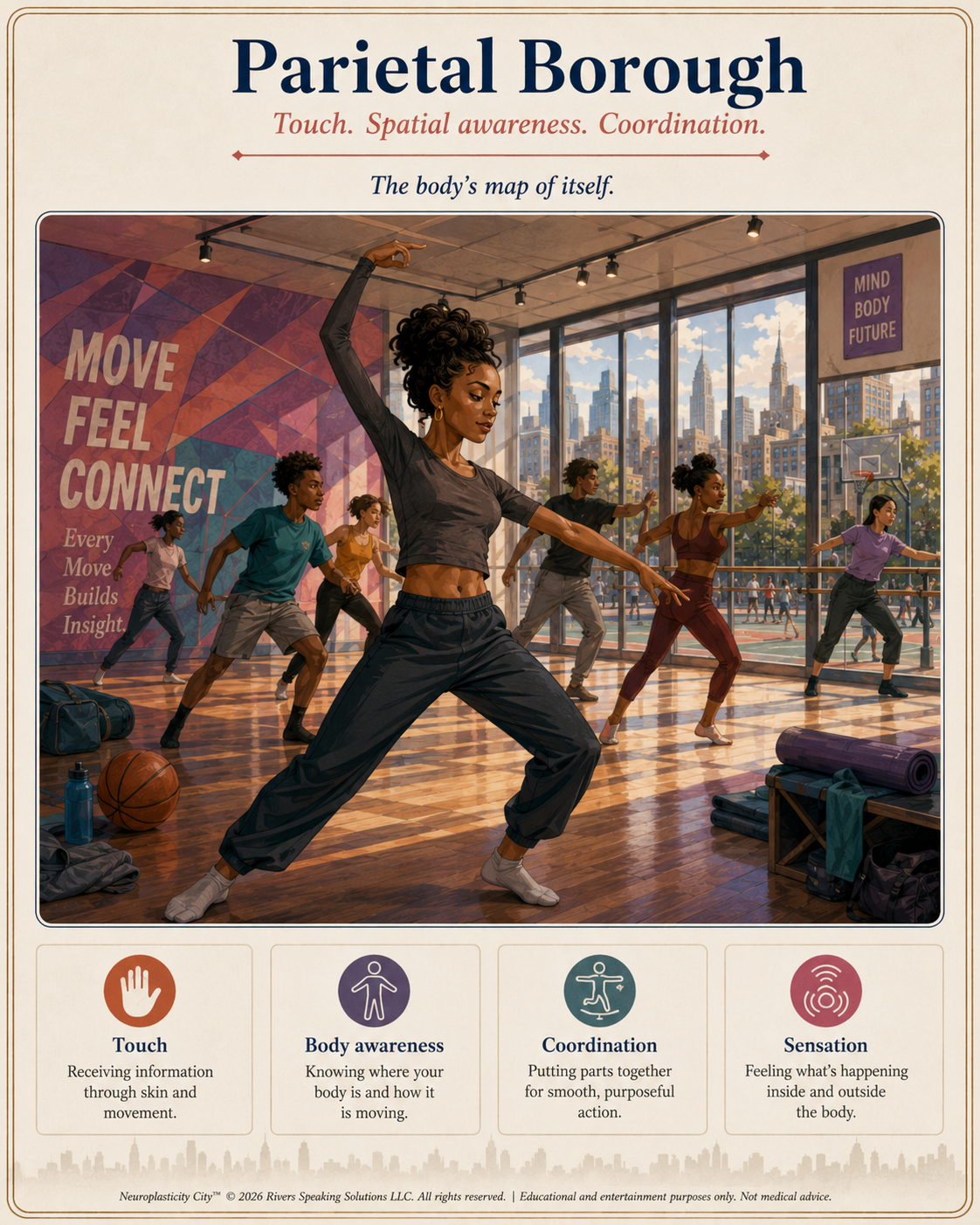
Parietal Borough
Movement, sensation, spatial awareness, and coordination. Recover.
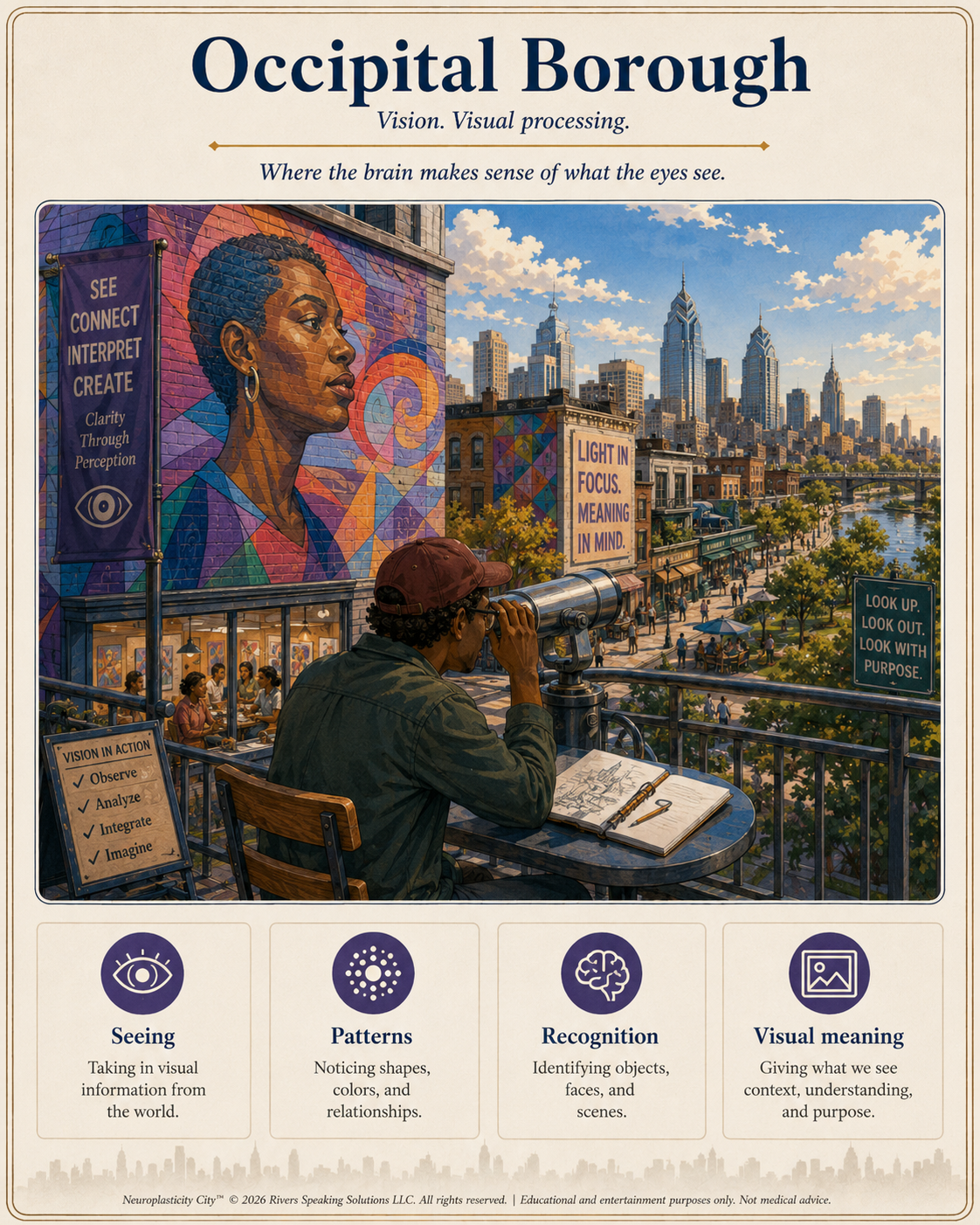
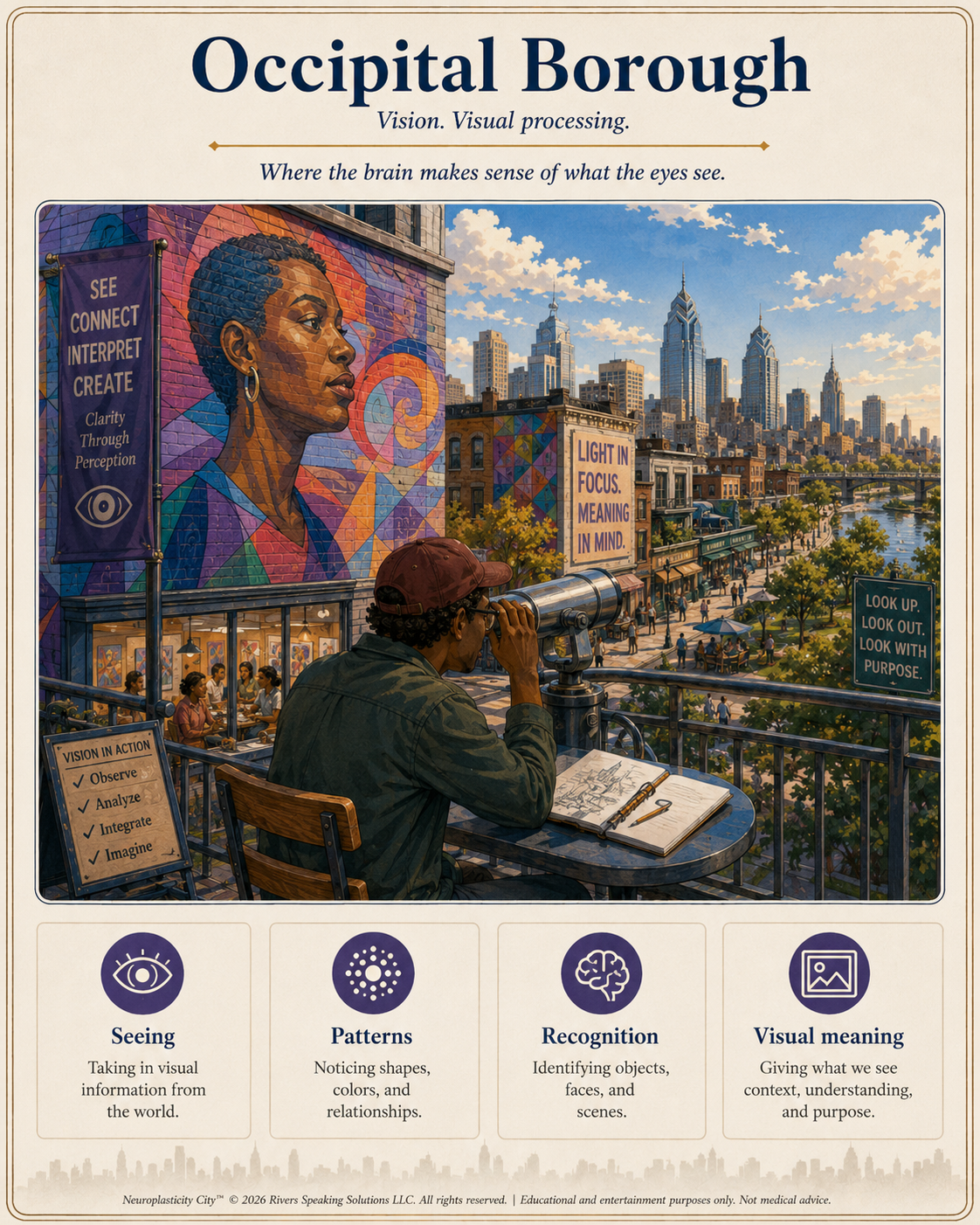
Occipital Borough
Vision, visual processing, recognition, and new ways of seeing. Rediscover.
New routes are being built.
Start with the Neuroplasticity City introduction on YouTube. Meet the city, explore the idea, and follow along as new brain science stories arrive.
Watch on YouTubeNeuroplasticity City is educational content, not medical advice or a substitute for care from a qualified clinician.
 Watch the city introduction on YouTube ↗