


Recovery resources and prevention built in.
ROSA helps stroke survivors and care partners navigate what’s next, whether they are newly home or years into recovery.
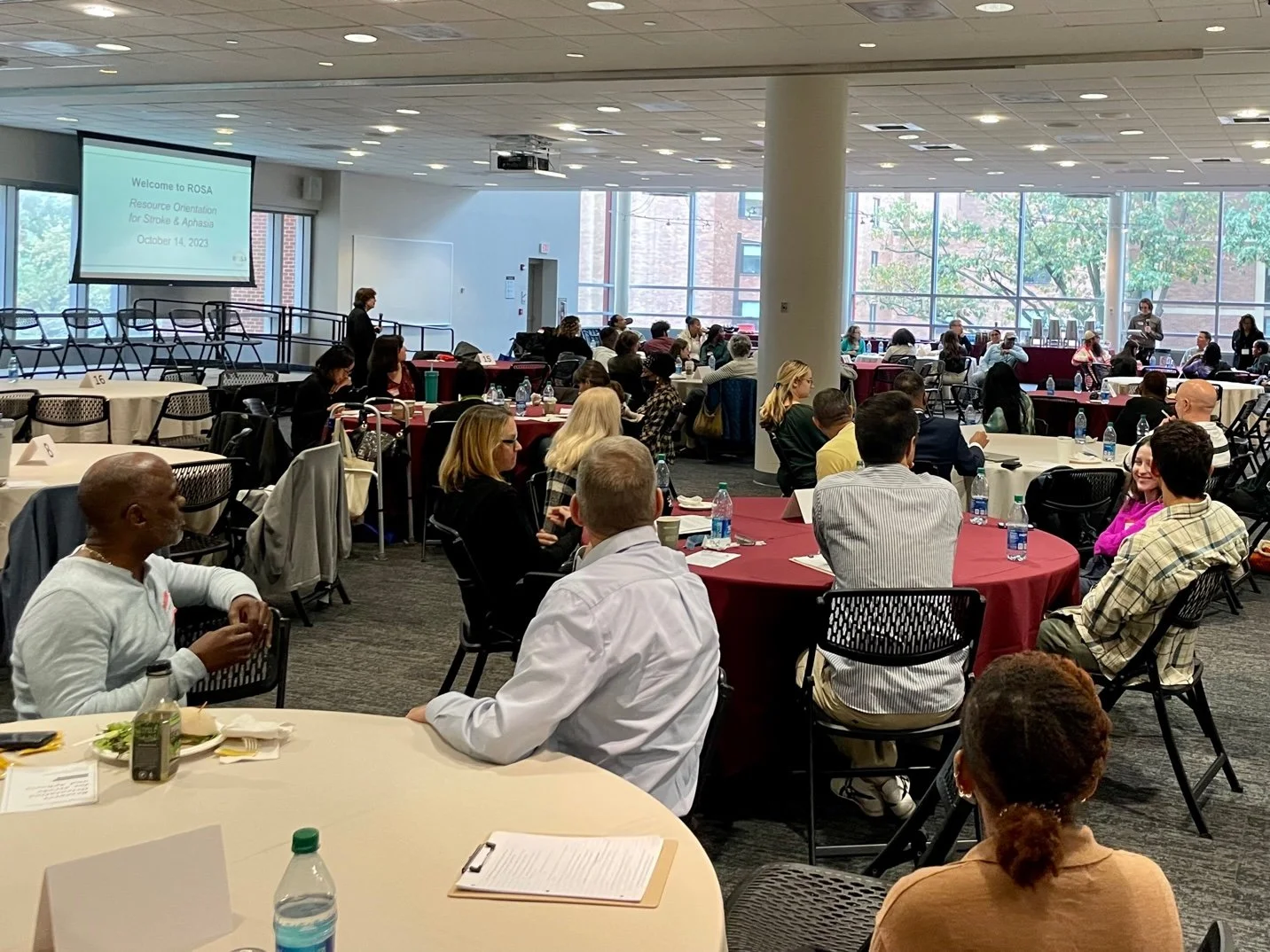
Resource Orientation for Stroke and Aphasia brings people together for clear education, time for questions, and practical connections to care and community.
The right information.
Time to take it in.
Discharge instructions can arrive when people are tired, overwhelmed, or still processing what happened. Different questions may surface once they are home, when therapy ends, or years later.
ROSA gives people another place to learn, ask, and reconnect. We reinforce the work of care teams by meeting people when they are ready to receive it.
Real rooms.
Questions that matter.
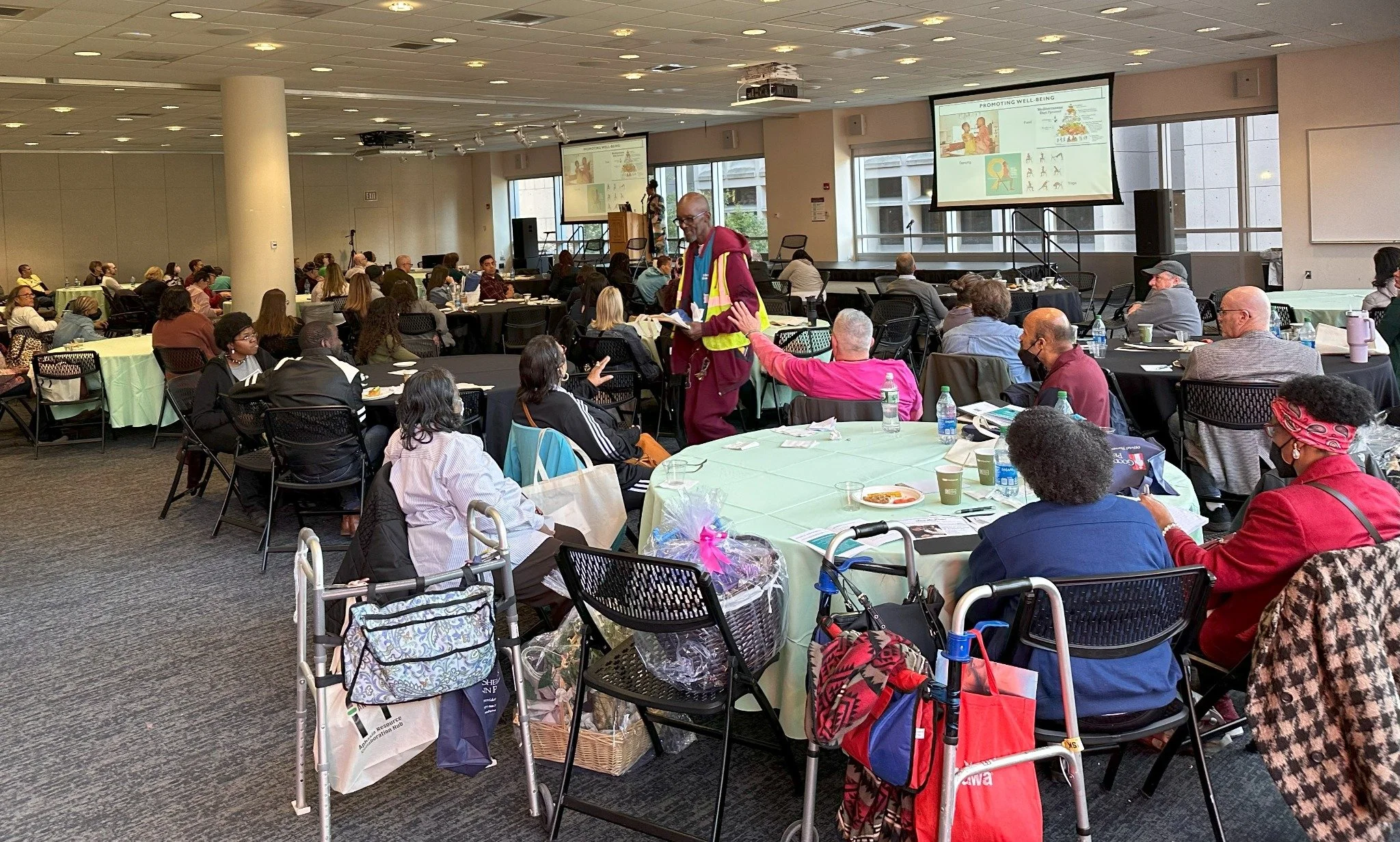
These photographs from ROSA gatherings in 2021 and 2023 show the work in community: people learning together, sharing questions, and connecting with support.
That experience shapes ROSA today. Survivors bring the realities of daily life. Clinicians bring professional guidance. Together, we make space for recovery, prevention, and a clearer next step.
Community experience is part of the program’s foundation.
Understand first. Then educate. Then equip.
Understand
Start with people’s questions, lived experience, and what they are ready to take in.
Educate
Make stroke, aphasia, recovery, and prevention easier to understand through plain language and conversation.
Equip
Leave with a workbook, useful resources, questions for the care team, and a practical next step.
Learn for the life you’re living.
A guided orientation connects health information to everyday life, with time for questions and clinicians present to respond.
Understand what changed
Stroke and aphasia, communication, neurofatigue, and the questions that come with recovery.
Keep prevention in view
Brain health, prevention education, and questions to bring back to your care team.
Find your next step
Local resources, follow-up conversations, community connections, and ways to involve the people in your corner.
More life in the pages.
More to take home.
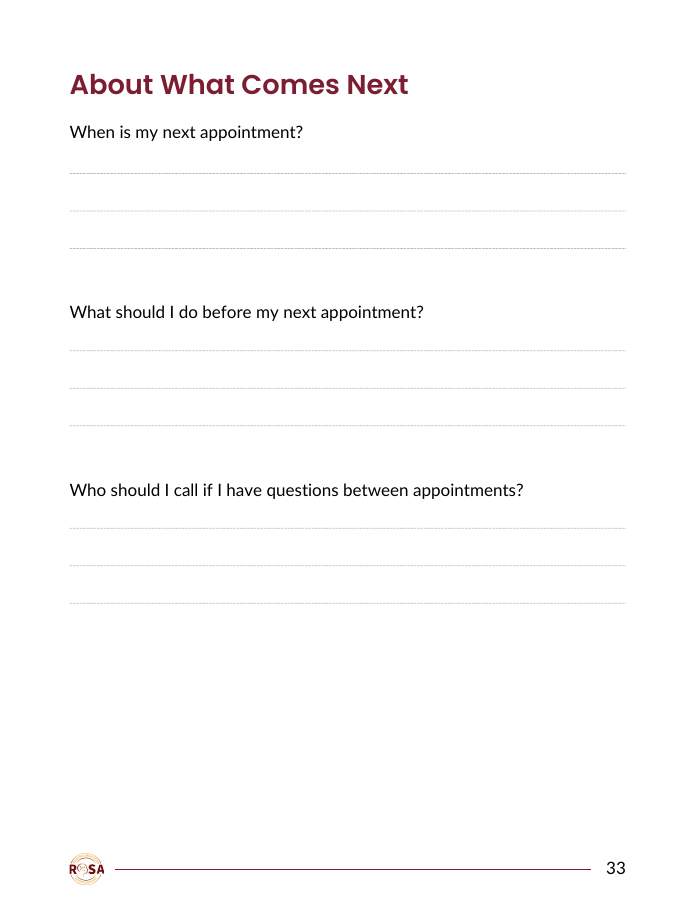
The workbook carries the conversation into everyday life, with practical ideas people can return to at their own pace.
- Heart healthy recipes with real flavor. Food that belongs in real kitchens.
- Easy-to-read articles about getting back to being you. Recovery, daily life, and finding your footing.
- A place for family and friends. Ways to be part of the recovery team.
- Questions and next steps. Space to prepare for appointments and keep useful resources close.
Meet people when they are ready to receive it.
After discharge
A place to revisit information, ask the questions that surfaced at home, and connect with care and community resources.
Months or years later
Still asking “now what?” Recovery and prevention questions continue. People can return as their needs, goals, and support systems change.
ROSA can be hosted as a community session or offered on a recurring schedule. The format is planned with the host and clinical partners around the people it will serve.
A shared effort. Clear roles.
RSS brings survivor-led facilitation, curriculum, accessible materials, and implementation support. Clinical participation is part of the model.
Clinical & university partners
Hospitals, health systems, and university teams with clinical partners bring clinicians into the room, answer clinical questions, and connect people with appropriate services.
Community hosts
Help people find the session, provide a welcoming and accessible setting, and connect the orientation with trusted local resources.
Healthcare & industry sponsors
Support unbranded stroke and brain health education, prevention resources, workbooks, and community access.
Plan together how participation, reported clarity, and practical next steps will be documented.
Research partnerships and facilitator training
Research opportunities are separate and optional. Participation in research is not required to attend ROSA.
Angie Cauthorn’s completed CITI training includes Good Clinical Practice, Biomedical Human Subjects Research, Social and Behavioral Research, and Community-Based Participatory Research.
Let’s make the next step easier to find.
Tell us who you want to reach and where ROSA could fit. We can plan the session, clinical participation, workbook, and community connections together.
ROSA provides education and orientation. It does not replace individual medical advice or therapy.